



By Abubakarr Joe Sesay – MoICE
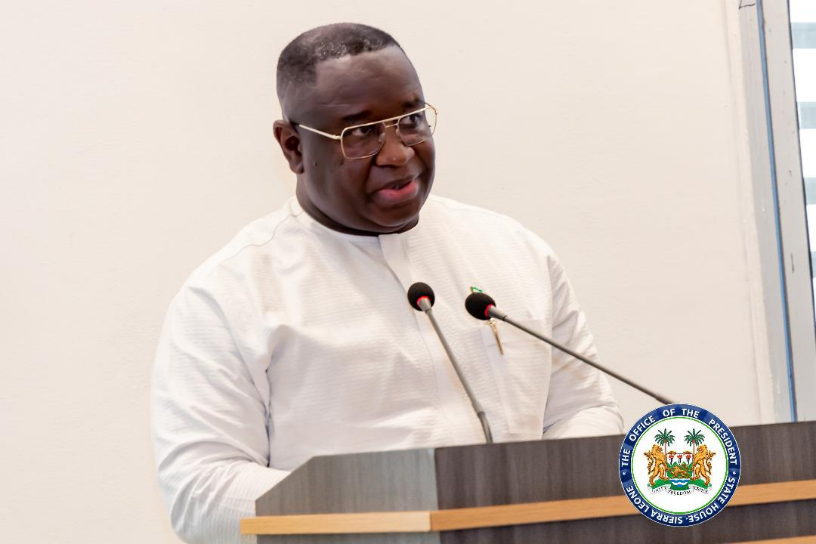
When the crying reached a crescendo in 2024 over the alarming rate of Kush abuse and its attendant consequences on especially young people, His Excellency President Julius Maada Bio immediately declared a national health emergency and established the National Taskforce for Drugs and Substance Abuse headed by Brig. Prof. Foday Sahr, the Executive Director of the National Public Health Agency (NPHA).
The mandate of the Taskforce is to coordinate a multi-sectoral response leveraging the expertise and experience of MDAs and district leadership. The national effort has sought to focus on providing strategic oversight and direction, setting technical best practice and minimum standards and closely supporting district councils.
The Taskforce has employed a five-prong approach in the fight against Kush through five pillars: Public Information and Risk Communication Pillar headed by the Ministry of Information and Civic Education (MoICE); Community Engagement Pillar led by the Ministry of Local Government and Community Affairs; Treatment and Care Pillar led by the Ministry of Health; Rehabilitation and Reintegration Pillar headed by the Ministry of Social Welfare; Law Enforcement Pillar led by the National Drug Law Enforcement Agency. The combined efforts of these pillars is gradually bearing fruits. The Risk Communication Pillar creates public awareness of the dangers of Kush thus preventing citizens from falling victim. The Community Engagement pillar on its part increases community involvement in the fight while the Treatment and Care pillar screens victims for ailments associated with Kush and treats them. The Rehabilitation and Reintegration Pillar rehabilitates and reintegrates Kush victims into their communities. The most critical aspect of the fight is cutting the supply chain of Kush and other harmful drugs because until there is no market more and more people could become victims. This is the task of the Law Enforcement pillar led by the National Drug Law Enforcement Agency and comprising the security forces who have conducted raids across the country and seized huge volumes of Kush and other harmful substances. Several arrests of Kush importers, manufacturers and dealers have also been made and most of them charged to court.
One thing that is categorically clear is that there will be no let up in the current campaign to rid the country of Kush and harmful drugs or substances. More tougher measures are going to be adopted in pursuit of those involved in this illegal and criminal trade that is destroying the future of the country.
Meanwhile, Landlords whose houses are used to manufacture, store or sell Kush will be arrested and charged to court and they could forfeit their property to the state. Furthermore, any bike, kehkeh, vehicle or boat used to transport Kush will be seized and forfeited to the state. These measures are due to the fact that the Kush market can only thrive if the drug is transported and transactions done at a particular place.
We must all be cognizant of the fact that it is only when all of us play our roles that collectively we will flush Kush out. We must all report those involved in the Kush trade in our respective communities to the relevant authorities for appropriate action. Please call 117 to report drug dealers. Your identity will never be disclosed so there should be no fear of reprisal. Additionally, Kush victims should be taken in for treatment and rehabilitation and not brutalized or chased away. Over 500 Kush victims have gone through rehabilitation and become good citizens again. We refer to them as ambassadors because they now go around educating their peers about the dangers of Kush. Call 117 for help. Rehabilitation centers are currently established in Hastings (Western Rural District), Gondama (Bo District, Southern Region), Daru (Kailahun District, Eastern Region) and very soon Makeni (Bombali District, Northern Region). This is a national fight that we must all fight and win.


