



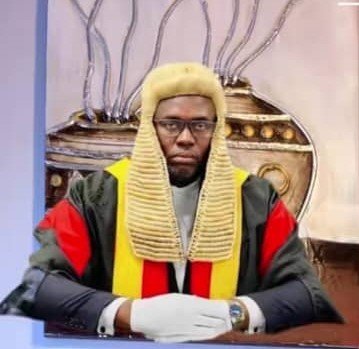
The Chairman and Leader of the National Grand Coalition (NGC) has raised serious concerns over several proposed amendments to the 1991 Constitution, warning that some of the changes could have far-reaching implications for democratic governance and constitutional accountability in Sierra Leone.
In a formal submission to the Right Honourable Speaker of Parliament, Segepoh Solomon Thomas, the NGC Chairman said while some of the proposed amendments were “long overdue” and could strengthen the country’s constitutional framework, others required further legal scrutiny, public consultation and national debate before being adopted.
He argued that constitutional reform was fundamentally different from ordinary legislation because it involved changes to the supreme law of the land.
According to him, proposed amendments affecting entrenched provisions under Section 108 of the Constitution must satisfy the constitutional referendum requirements under Sections 108(3)–(6), rather than being approved by Parliament alone.
The NGC leader also raised concerns about the potential impact of some proposed amendments on the separation of powers and the independence of constitutional institutions.
He particularly pointed to the proposed amendments to Sections 32(3) and 34(2), which seek to establish Search and Nomination Committees for the appointment of the Chief Electoral Commissioner and the Chairperson of the Political Parties Regulatory Commission.
While welcoming the establishment of such committees, he expressed concern over the wording that states that “the President shall appoint a Search and Nomination Committee.”
He argued that giving the President discretion over the composition of a committee intended to facilitate independent and merit-based appointments could create a potential conflict of interest and undermine public confidence in the process.
The NGC Chairman proposed that institutions designated under the Constitution should nominate their representatives to the committees, with the President’s role limited to formally appointing the committees after verifying that the nominees meet the prescribed constitutional requirements.
He further called for the President to have no power to reject or substitute nominees who satisfy the constitutional requirements.
Opposition to District-Based Party Lists
The NGC Chairman also expressed reservations about the proposed repeal and replacement of Sections 38(2) and 74(1)(b), which would replace constituency-based parliamentary elections with district-based party-list elections.
He argued that the proposed system could weaken the direct accountability of Members of Parliament to their constituents by making them more dependent on political party leadership.
He also questioned the permanent adoption of the proportional representation system used during the 2023 General Elections, arguing that its design and thresholds could limit the representation of smaller political parties.
He therefore urged Parliament to undertake broad national consultations before permanently incorporating such a system into the Constitution.
Concerns Over Independent Presidential Candidates
The NGC leader welcomed the proposed amendment to Section 42, which would allow independent candidates to contest presidential elections.
However, he questioned the requirement for an independent presidential candidate to demonstrate “sufficient financial capacity.”
He described the phrase as vague and subjective, asking who would determine what constitutes sufficient financial capacity and what objective criteria would be used.
He also questioned what safeguards would prevent politically motivated exclusion and whether a candidate with significant public support could be disqualified because of an assessment of their financial capacity.
According to him, unless the requirement is clearly defined through objective constitutional standards, it could become a mechanism for excluding otherwise qualified citizens from contesting for public office.
NGC Proposes Alternative Electoral Model
The NGC Chairman also presented alternative proposals for parliamentary and presidential elections.
For parliamentary elections, he proposed retaining constituency-based voting while introducing a national threshold requiring a parliamentary candidate to obtain at least one percent of the total valid votes cast nationally.
He argued that the proposal would discourage the proliferation of political parties with negligible national support while allowing emerging political movements with genuine nationwide appeal to gain representation in Parliament.
He said the model could also encourage political parties to develop broader national support rather than relying primarily on regional or ethnic constituencies.
For presidential elections, the NGC leader proposed retaining the constitutional requirement for a presidential candidate to secure 55 percent of valid votes to form a government.
However, instead of proceeding to a second-round runoff where no candidate reaches the threshold, he proposed allowing political parties to negotiate and form a formal coalition government.
Under his proposal, parties that combine their electoral mandates and collectively meet or exceed the constitutional threshold should be permitted to form a government under a legally binding coalition agreement.
He further proposed that such coalition agreements be given constitutional recognition.
Where a coalition government subsequently collapses and loses its constitutional mandate, he said the Constitution should require either the formation of another coalition capable of meeting the required threshold or the holding of fresh national elections.
According to the NGC Chairman, such a system could encourage consensus-building, reduce the financial cost of repeated elections and promote cooperative governance.
He stressed that the issues raised in his submission represented only some of the concerns identified during his initial review of the proposed constitutional amendments.
“The Constitution belongs to the people of Sierra Leone not to any government, political party, or generation,” he maintained, urging Parliament to carefully consider the concerns before making a final decision on the proposed reforms.
He said constitutional amendments should ultimately strengthen democracy, protect the separation of powers, safeguard citizens’ rights and reinforce public confidence in Sierra Leone’s constitutional order.
This version is suitable for a print newspaper report and keeps the NGC Chairman’s positions attributed rather than presenting them as established facts


