



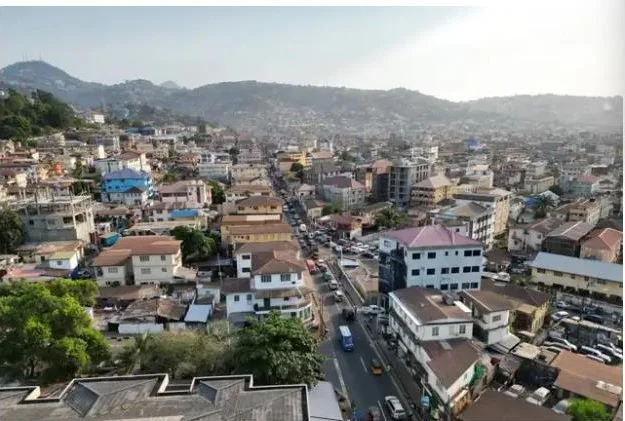
Following a consultative meeting held by the Ministry of Local Government on Thursday, September 18, 2025, at the Freetown City Council Auditorium, the Krio community both at home and in the diaspora has issued a formal objection to the proposal to divide the Municipality of Freetown into three separate local councils.
The meeting, widely streamed and discussed across social media platforms, was convened to deliberate on a controversial proposal by the Ministry aimed at addressing service delivery and governance challenges through the segmentation of the capital city. However, the move has sparked widespread concern, particularly among the Krio population, who describe the proposal as both unsustainable and potentially divisive.
In a strongly worded statement, the Krio community expressed appreciation for the democratic spirit in which the meeting was held, likening it to a “public forum” reflective of democratic ideals. Nevertheless, they emphasized that the session should have been one of several inclusive town halls to collectively explore ways of improving governance and development within the Western Area as a whole.
At the heart of their objection lies the concern that dividing the already small 87-square-kilometre capital city home to over 1.3 million people into three smaller municipalities would create entities of less than 30 square kilometers each. The community argues that such fragmentation would render the new councils unsustainable, both administratively and financially, and lead to further inefficiencies in the delivery of basic services.
“This division,” the statement notes, “will create councils that are more or less small than 30 square kilometers each… and difficult to provide equitable services.” The Krio community also fears that the new councils could become politicized enclaves, fostering division and possible intimidation based on perceived political affiliations.
The statement further calls for a broader national approach to urban planning, urging the government to address the root causes of population growth and informal settlement expansion. Instead of fragmenting Freetown, the community recommends strengthening existing local councils, devolving powers more effectively to the ward level, and focusing on sustainable urban expansion that incorporates rural development.
Financial concerns were also raised. According to the Krio community, the eastern flank of Freetown currently generates only about 20% of the city’s revenue, with the remainder coming from the central business district and western areas. They argue that any fragmentation could weaken revenue bases across all three proposed municipalities, limiting the capacity for meaningful development projects.
“As things stand, any potential fragmentation will only reduce revenues generated from the ensuing councils and would compound existing problems rather than solving them,” the statement warned.
In closing, the Krio community called on the Ministry to reconsider the proposed restructuring of Freetown’s municipal governance, cautioning against any hasty implementation of a plan that, in their view, has yet to receive broad public support.
“We remain committed to future deliberations along the lines we have suggested,” the statement concluded, “and we urge your good offices to avoid any inordinate actualization of a proposal that is still far from popular acceptance.”
The Krio community reaffirmed their dedication to working toward a Freetown that stands as a model city not just for Sierra Leone, but for Africa and the world insisting that achieving this vision requires deeper consultation and more comprehensive planning.


