



By: Amara Kargbo
The Ministry of Foreign Affairs and International Cooperation concluded a two-day national consultation to assess 310 recommendations issued during Sierra Leone’s fourth Universal Periodic Review (UPR) before the United Nations Human Rights Council in Geneva on 12 May 2026.
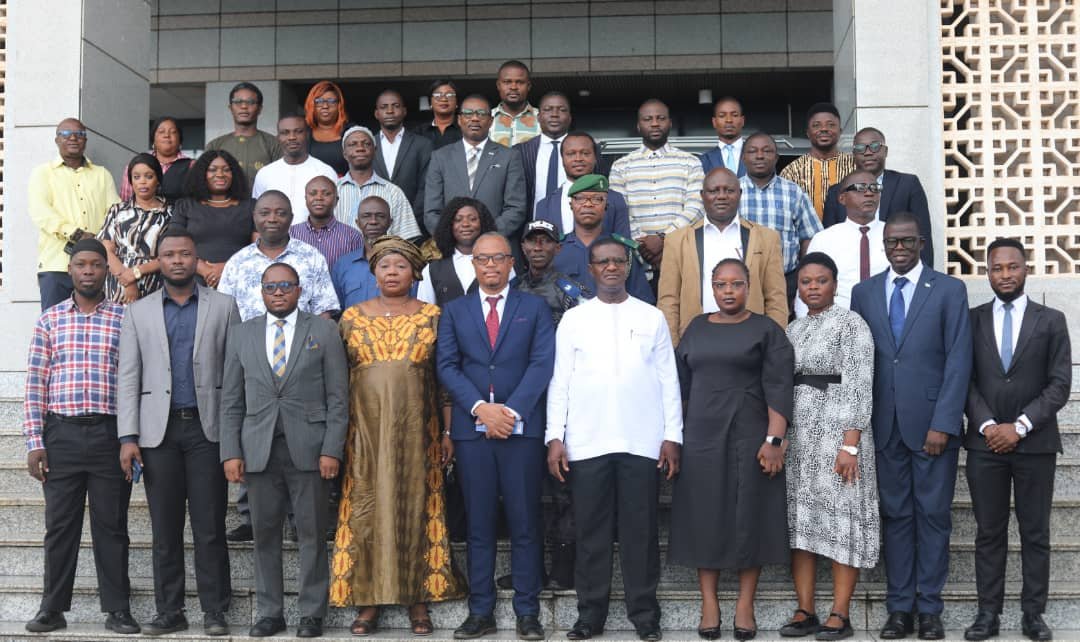
The consultation, held on 6 and 7 August at the ministry’s conference room in Freetown, brought together ministries, departments, agencies, development partners and other relevant stakeholders to examine the recommendations and consider the state’s response for the 2026–2030 UPR cycle.
At the opening session, the Deputy Director General of Policy at the Ministry of Foreign Affairs and International Cooperation, Alhaji Momodu A. Wurie, expressed appreciation to the Embassy of Ireland for supporting the undertaking. He said the collaboration reflected enduring bilateral ties and a shared commitment to democratic governance, the rule of law, and the promotion and protection of human rights.
In his remarks, Wurie described the UPR as one of the Human Rights Council’s most significant mechanisms for accountability, cooperation and the universal safeguarding of human rights. He said the process rests on the principles of universality, constructive dialogue, equal treatment and peer review, thereby allowing every member state to present its human rights record, exchange experiences, identify constraints and receive practical guidance.
According to Alhaji Wurie, the consultation drew its mandate from United Nations General Assembly Resolution 60/251 and Human Rights Council Resolution 16/21, both of which encourage broad and inclusive engagement with relevant stakeholders when states determine strategies for implementing UPR recommendations.
Throughout the two-day exercise, participants examined all 310 recommendations to determine which proposals the government would endorse and carry forward during the 2026–2030 cycle. The conclusions reached are expected to shape Sierra Leone’s official position when the Human Rights Council formally adopts the UPR outcome in September 2026.
For the government, the UPR is not merely an international reporting requirement, but a practical instrument for reinforcing governance, advancing the rule of law and promoting sustainable development, Wurie said.
In broader policy terms, he added that implementation of the recommendations would complement the National Development Plan and President Dr Julius Maada Bio’s Big Five Game Changers agenda, particularly in the areas of governance reform, public sector efficiency, human capital development, youth empowerment, gender equality, social justice and inclusive national progress.
Among the reforms already undertaken, Wurie cited the abolition of the death penalty, accession to the Second Optional Protocol to the International Covenant on Civil and Political Rights, ongoing constitutional review efforts, criminal justice reform under the Criminal Procedure Act 2024, and strengthened child protection provisions through the Child Justice Act 2025.
On the wider human rights agenda, he said the advancement and preservation of human rights demanded sustained commitment, adequate institutional capacity and close collaboration among government, parliament, the judiciary, independent bodies, civil society organisations, development partners and citizens.
In practical terms, some recommendations could be executed through administrative measures, while others would require legislative amendment, institutional reinforcement, technical assistance or additional financial support. For that reason, he said, approved recommendations must remain ambitious, attainable and capable of delivering measurable improvements in the lives of citizens.
With that in mind, Wurie urged participants to approach the deliberations with openness, objectivity and a spirit of constructive partnership, guided not only by international obligations but also by a shared resolve to build a more just, peaceful, inclusive and prosperous Sierra Leone.
In acknowledging continued support, he commended ministries, departments, agencies, the Human Rights Commission of Sierra Leone, civil society organisations, development partners and members of the diplomatic community for their contribution to the country’s human rights agenda. He said their expertise, dedication and cooperation would remain vital to the successful execution of the recommendations emerging from the consultation.
The Doctor of Legal Affairs at the Ministry, Patrick Hassan Morlai Koroma noted that the National Reporting Mechanism (NRM) and the Ministry of Foreign Affairs and International Cooperation are grateful for the valuable contributions of Government officials and civil society representatives who took part in the two-day national consultation.
He stressed that the consultation was a crucial step in shaping the Government’s position on the 310 recommendations from Sierra Leone’s Fourth Cycle Universal Periodic Review, held in Geneva on 12 May 2026. The Government is now finalising its responses, which will be formally communicated at the 63rd Human Rights Council Session in September 2026.
He pointed that, at the 63rd Session of the Human Rights Council in September 2026, Sierra Leone will formally communicate the recommendations it accepts and commits to implementing during the next implementation and reporting cycle.
On behalf of the Honourable Minister, the Director-General and the senior leadership of the Ministry, the NRM extends its sincere appreciation to the professional and technical heads of Ministries, Departments and Agencies for designating UPR Focal Points and facilitating their participation in this consultation. He equally appreciated the valuable contributions of civil society organisations, whose participation helped ensure that the process was inclusive, participatory and informed by a broad range of perspectives on Sierra Leone’s human rights situation.
However, he expressed their sincere gratitude to the Embassy of Ireland in Freetown for its timely support, which enabled this national consultation to take place. The Embassy’s support is a further demonstration of Ireland’s continued commitment to the promotion and protection of human rights in Sierra Leone and to strengthening the country’s engagement with international human rights mechanisms


