



By Alimatu Kargbo
After years of collapse, debt and uncertainty, Sierra Leone’s historic national telecommunications operator, Saratel, is making a comeback not through rebuilding its old infrastructure, but by operating on another company’s network.
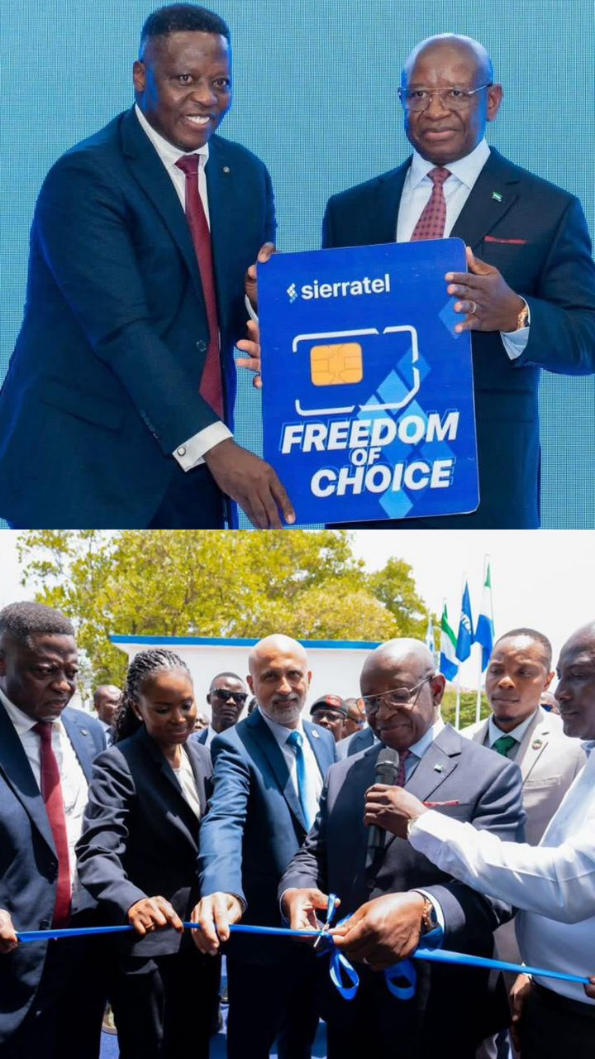
At a packed relaunch ceremony held at the Miatta Conference Centre on May 5, 2026, government officials, telecom executives and former Saratel staff witnessed the return of a brand that once defined communication in Sierra Leone. For many citizens, Saratel was the company through which they made their first phone call, sent their first text message and connected with the outside world.
“Today is not just an important day for Saratel, it is an important day for Sierra Leone,” said Minister of Communication, Technology and Innovation, Salima Monorma Bah, while announcing that the state-owned operator will resume services as a Mobile Virtual Network Operator (MVNO). Under the MVNO model, Saratel will provide voice, data and mobile money services without owning physical infrastructure. The network services will instead be provided through a strategic partnership with Africell.
Minister Bah paid tribute to the company’s legacy, noting that Saratel had once been central to how Sierra Leoneans connected with families, friends and opportunities beyond their communities. However, she also acknowledged the severe challenges that led to the company’s collapse.
She explained that years of poor decision-making, including a failed transition from analogue to digital systems, resulted in rapidly declining infrastructure and outdated technology that could no longer meet market demands. The company also accumulated significant financial liabilities, causing its market presence to diminish drastically.
According to the Minister, direct government investment was not feasible because of competing national priorities, while attempts at privatisation failed due to limited investor interest arising from Saratel’s debts and liabilities. Management restructuring options were also considered too costly and risky for government.
“We understood that we couldn’t apply yesterday’s solutions to today’s problems,” she said.
Chief Executive Officer of Africell, Shadi Gerjawi, confirmed that a formal agreement had been signed between the two entities. He stressed that the arrangement does not amount to privatisation.
“Seratel has not been sold; it is being revived. National ownership remains fully intact,” Gerjawi stated. “This is about strengthening a national asset, not surrendering it.”
Under the agreement, the government will not invest directly in Saratel’s operations or infrastructure, yet the company is expected to begin generating revenue immediately. Africell will provide the network infrastructure, technology and commercial investment, while Saratel contributes its national identity, customer base and legacy.
“Full service means Seratel subscribers will have access to voice, data and mobile money from day one,” Gerjawi added.
Reflecting on his personal connection with the company, he recalled being a former Saratel subscriber. “I remember what it meant when we moved from four-digit to five-digit numbers. I remember when people had to visit Seratel offices to make international calls, and later when international calls could finally be made from home. That was freedom,” he said.
Minister of Labour and Social Security, Mohamed Rahman Swarray, who previously handled the Saratel crisis during his tenure as Minister of Information, described the difficult conditions endured by former staff members.
“Because of the mismanagement and poor decisions taken over the years, our staff went through terrible and horrendous times,” Swarray said. “There were increased divorce cases among staff, and many of them passed away without living to witness this day.”
He disclosed that the agreement includes provisions aimed at resolving outstanding staff-related liabilities. Earlier, Gerjawi had confirmed that Africell would cover a significant portion of those obligations. Swarray called on the audience to applaud the workers who survived to witness the company’s revival.
The Labour Minister also referenced remarks made by President Julius Maada Bio during the swearing-in of his cabinet in 2018, when he urged officials to help heal the country after years of hardship. Swarray said that principle guided negotiations surrounding the Saratel revival.
Meanwhile, the National Communications Authority (NatCA) described the relaunch as “a pivotal development in the evolution of Sierra Leone’s telecommunications sector.”
In a statement, the regulator said the move reflects deliberate policy reforms aimed at liberalising the telecommunications market, strengthening competition and maximising benefits for consumers.
NatCA further stated that telecom operators would now be expected to extend services to rural and underserved communities, particularly in the southern region of the country, in order to improve connectivity, moderate prices and encourage value-added services for consumers.
The Authority also warned that all operators both existing companies and new entrants must comply with regulations governing consumer protection, data security and fair market practices.
“We will continue to intensify monitoring and enforcement to ensure that innovation does not compromise regulatory integrity or public trust,” the statement concluded.


